<?xml version="1.0" encoding="UTF-8"?>
<feed xmlns="http://www.w3.org/2005/Atom">
  <title type="text">Raleigh Historic</title>
  <updated>2026-11-09T15:06:28+00:00</updated>
  <generator uri="http://framework.zend.com" version="1.12.20">Zend_Feed_Writer</generator>
  <link rel="alternate" type="text/html" href="https://raleighhistoric.org/"/>
  <link rel="self" type="application/atom+xml" href="https://raleighhistoric.org/items/browse?output=rss2"/>
  <id>https://raleighhistoric.org/</id>
  <author>
    <name>Raleigh Historic</name>
    <uri>https://raleighhistoric.org</uri>
  </author>
  <link rel="hub" href="https://pubsubhubbub.appspot.com/"/>
  <entry>
    <title type="html"><![CDATA[Lustron House]]></title>
    <summary type="html"><![CDATA[<p>ABC</p><p>Date: 1949 (Relocated 2017)</p><p><em><strong><a href="https://raleighhistoric.org/items/show/239">For more view the original article</a></strong></em></p>]]></summary>
    <published>2026-11-09T14:56:05+00:00</published>
    <updated>2026-11-09T15:06:28+00:00</updated>
    <link rel="alternate" type="text/html" href="https://raleighhistoric.org/items/show/239"/>
    <id>https://raleighhistoric.org/items/show/239</id>
    <author>
      <name>RHDC</name>
    </author>
  </entry>
  <entry>
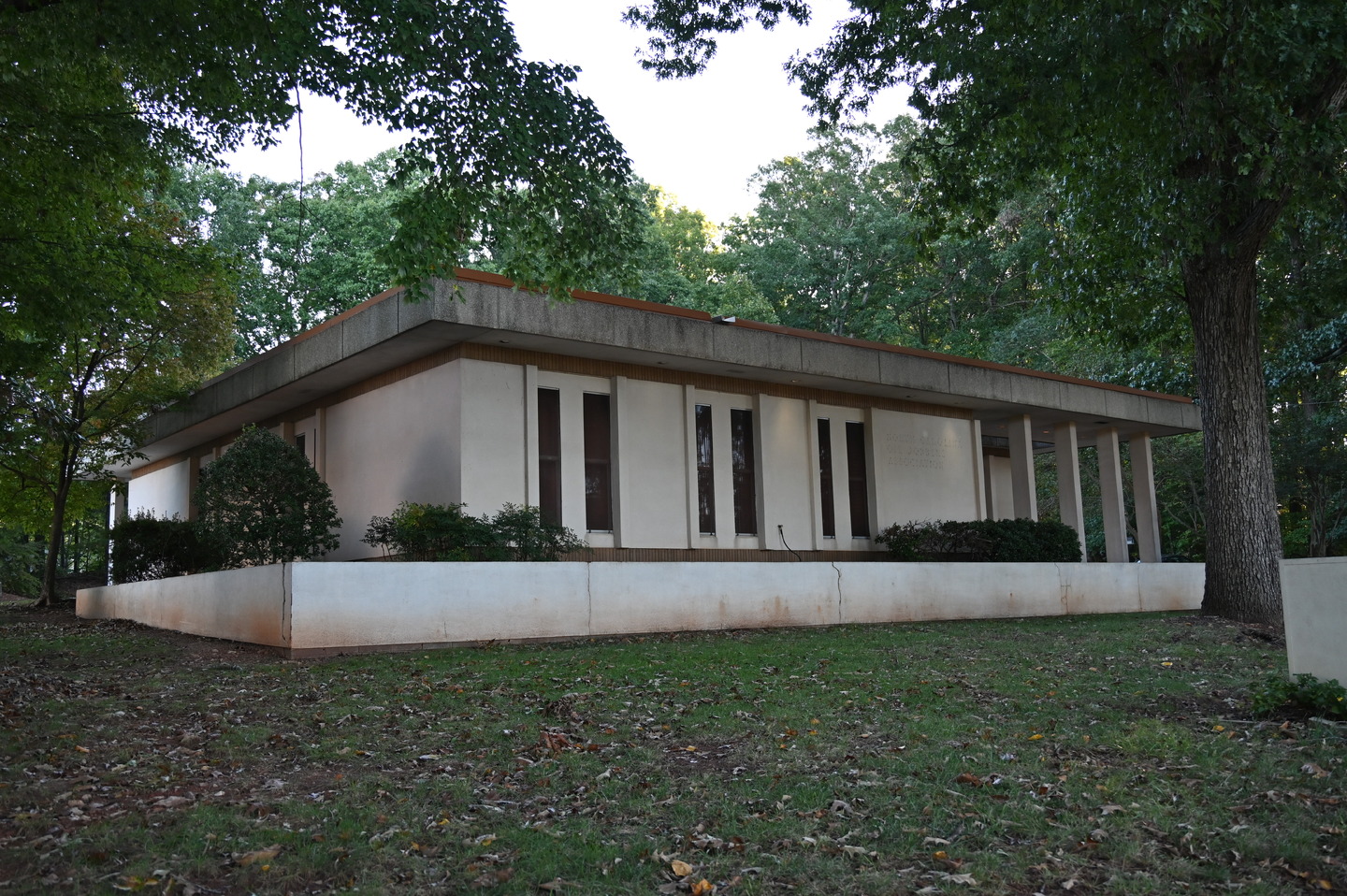
    <title type="html"><![CDATA[N.C. Oil Jobbers Office Building]]></title>
    <summary type="html"><![CDATA[<p><strong><em>1-story parapet roof Miscellaneous Modernist steel frame building with stucco exterior</em></strong></p><img src="https://raleighhistoric.org/files/fullsize/f505bc4e51bd29a69c16bbcee0225558.jpg" alt="[Untitled]" /><br/><p>1-story parapet roof Miscellaneous Modernist steel frame building with stucco exterior </p><p>Build Date: 1970</p><p><em><strong><a href="https://raleighhistoric.org/items/show/238">For more (including 6 images) view the original article</a></strong></em></p>]]></summary>
    <published>2026-11-04T18:36:07+00:00</published>
    <updated>2026-11-04T21:44:09+00:00</updated>
    <link rel="alternate" type="text/html" href="https://raleighhistoric.org/items/show/238"/>
    <id>https://raleighhistoric.org/items/show/238</id>
    <author>
      <name>RHDC</name>
    </author>
  </entry>
  <entry>
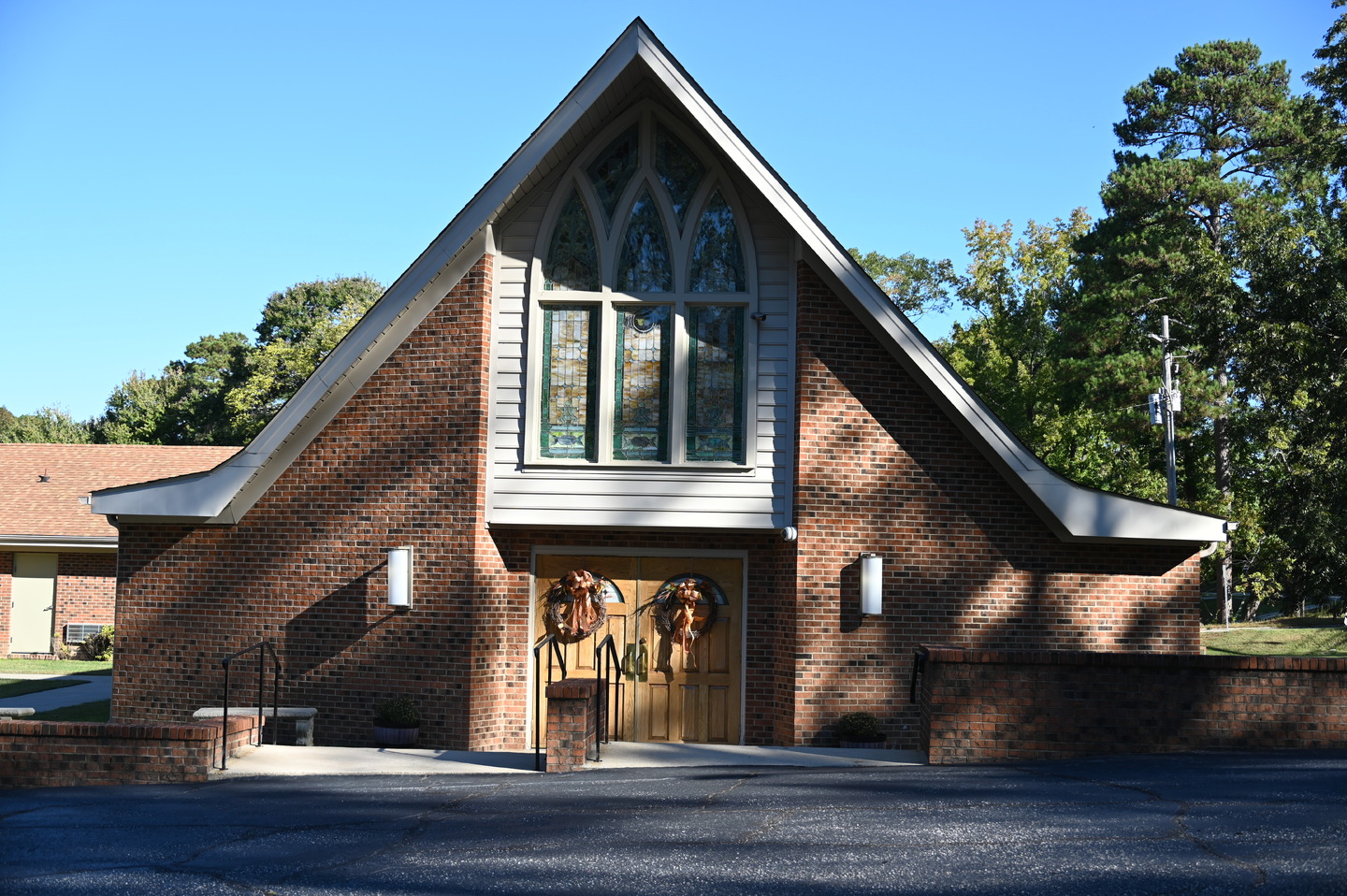
    <title type="html"><![CDATA[First Congregational Church]]></title>
    <summary type="html"><![CDATA[<p><strong><em>One-story front gable brick-veneered Miscellaneous Modernist church</em></strong></p><img src="https://raleighhistoric.org/files/fullsize/eb03eecc0476d197c278221097d2a41b.jpg" alt="[Untitled]" /><br/><p>One-story front gable brick-veneered Miscellaneous Modernist church</p><p>Build Date: 1977</p><p><em><strong><a href="https://raleighhistoric.org/items/show/237">For more (including 5 images) view the original article</a></strong></em></p>]]></summary>
    <published>2026-10-16T12:26:33+00:00</published>
    <updated>2026-11-04T14:14:24+00:00</updated>
    <link rel="alternate" type="text/html" href="https://raleighhistoric.org/items/show/237"/>
    <id>https://raleighhistoric.org/items/show/237</id>
    <author>
      <name>RHDC</name>
    </author>
  </entry>
  <entry>
    <title type="html"><![CDATA[(former) Governor Morehead School for Colored Blind and Deaf]]></title>
    <summary type="html"><![CDATA[<img src="https://raleighhistoric.org/files/fullsize/403063ddc7184757cd0c8df6917bb24c.jpg" alt="[Untitled]" /><br/><p>Build Date: 1929</p><p><em><strong><a href="https://raleighhistoric.org/items/show/236">For more (including 2 images) view the original article</a></strong></em></p>]]></summary>
    <published>2026-10-16T12:26:00+00:00</published>
    <updated>2026-11-04T14:12:53+00:00</updated>
    <link rel="alternate" type="text/html" href="https://raleighhistoric.org/items/show/236"/>
    <id>https://raleighhistoric.org/items/show/236</id>
    <author>
      <name>RHDC</name>
    </author>
  </entry>
  <entry>
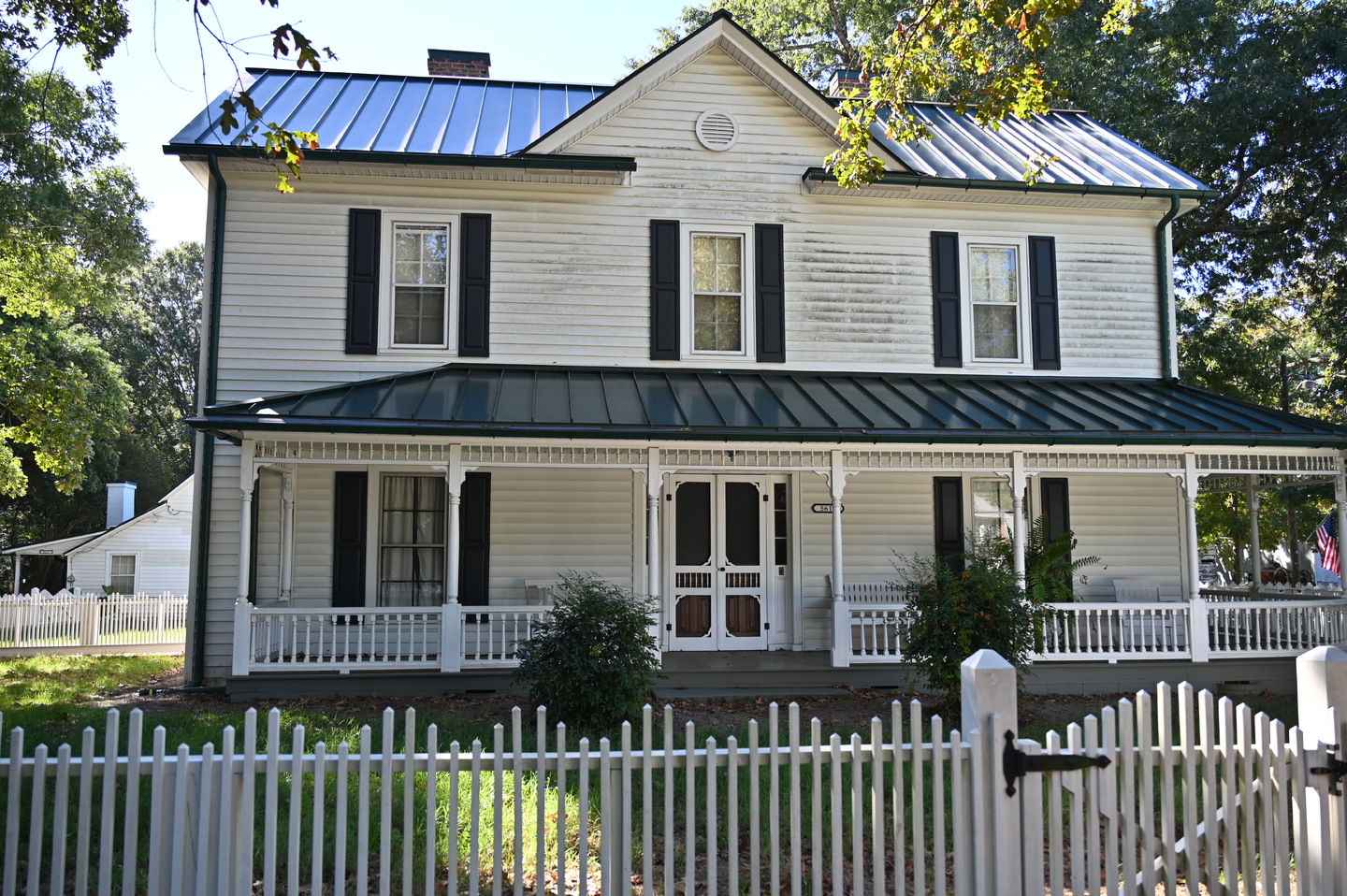
    <title type="html"><![CDATA[Jesse Penny House and Outbuildings]]></title>
    <summary type="html"><![CDATA[<p><strong><em>Triple-A frame I-House and farm buildings</em></strong></p><img src="https://raleighhistoric.org/files/fullsize/2f92403a212fcc107b4159755cace7bf.jpg" alt="[Untitled]" /><br/><p>Build Date: 1900</p><p><em><strong><a href="https://raleighhistoric.org/items/show/235">For more (including 5 images) view the original article</a></strong></em></p>]]></summary>
    <published>2026-10-16T12:21:27+00:00</published>
    <updated>2026-11-04T14:06:54+00:00</updated>
    <link rel="alternate" type="text/html" href="https://raleighhistoric.org/items/show/235"/>
    <id>https://raleighhistoric.org/items/show/235</id>
    <author>
      <name>RHDC</name>
    </author>
  </entry>
  <entry>
    <title type="html"><![CDATA[N.C. Museum of Art, East Building]]></title>
    <summary type="html"><![CDATA[<img src="https://raleighhistoric.org/files/fullsize/99437dd2a5e504876040dd70b0a6d279.jpg" alt="[Untitled]" /><br/>[Text Unavailable]<p><em><strong><a href="https://raleighhistoric.org/items/show/234">For more (including 5 images) view the original article</a></strong></em></p>]]></summary>
    <published>2026-10-15T20:59:47+00:00</published>
    <updated>2026-11-04T14:03:41+00:00</updated>
    <link rel="alternate" type="text/html" href="https://raleighhistoric.org/items/show/234"/>
    <id>https://raleighhistoric.org/items/show/234</id>
    <author>
      <name>RHDC</name>
    </author>
  </entry>
  <entry>
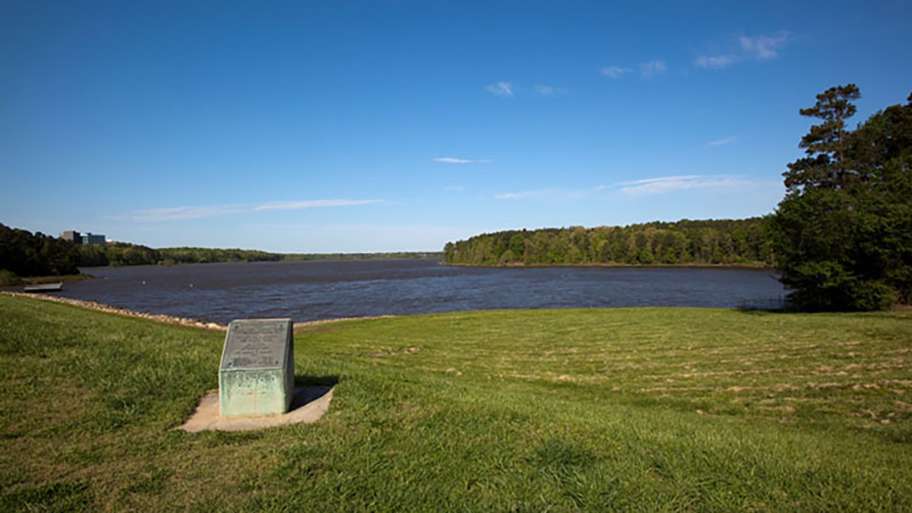
    <title type="html"><![CDATA[Crabtree Creek Recreational Demonstration Area]]></title>
    <summary type="html"><![CDATA[<p><strong><em>A public works project provided relief for the unemployed and a much-used state park for Raleigh.</em></strong></p><img src="https://raleighhistoric.org/files/fullsize/27239651d58552439f90899865385edb.jpg" alt="[Untitled]" /><br/><p>Better known as Umstead State Park, Crabtree Creek Recreational Demonstration Area is a public works project that converted worn-out and subpar farmland into a recreational park during the Depression. In the short term, the project supplied work for young, unskilled men who joined the Civilian Conservation Corps (CCC) as well as work for the architects, foresters, and engineers who designed the project and trained the workforce. The CCC workers planted forests on old farm fields, created lakes, and built the rustic-style bridges, roads, trails, picnic areas, and camp facilities that are characteristic of CCC projects. Today, the park contains the region's best collection of New Deal rustic architecture and landscape design.</p><p>Period of Significance: 1934 – 1941</p><p><em><strong><a href="https://raleighhistoric.org/items/show/233">For more view the original article</a></strong></em></p>]]></summary>
    <published>2026-10-15T20:59:05+00:00</published>
    <updated>2026-11-04T14:05:18+00:00</updated>
    <link rel="alternate" type="text/html" href="https://raleighhistoric.org/items/show/233"/>
    <id>https://raleighhistoric.org/items/show/233</id>
    <author>
      <name>RHDC</name>
    </author>
  </entry>
  <entry>
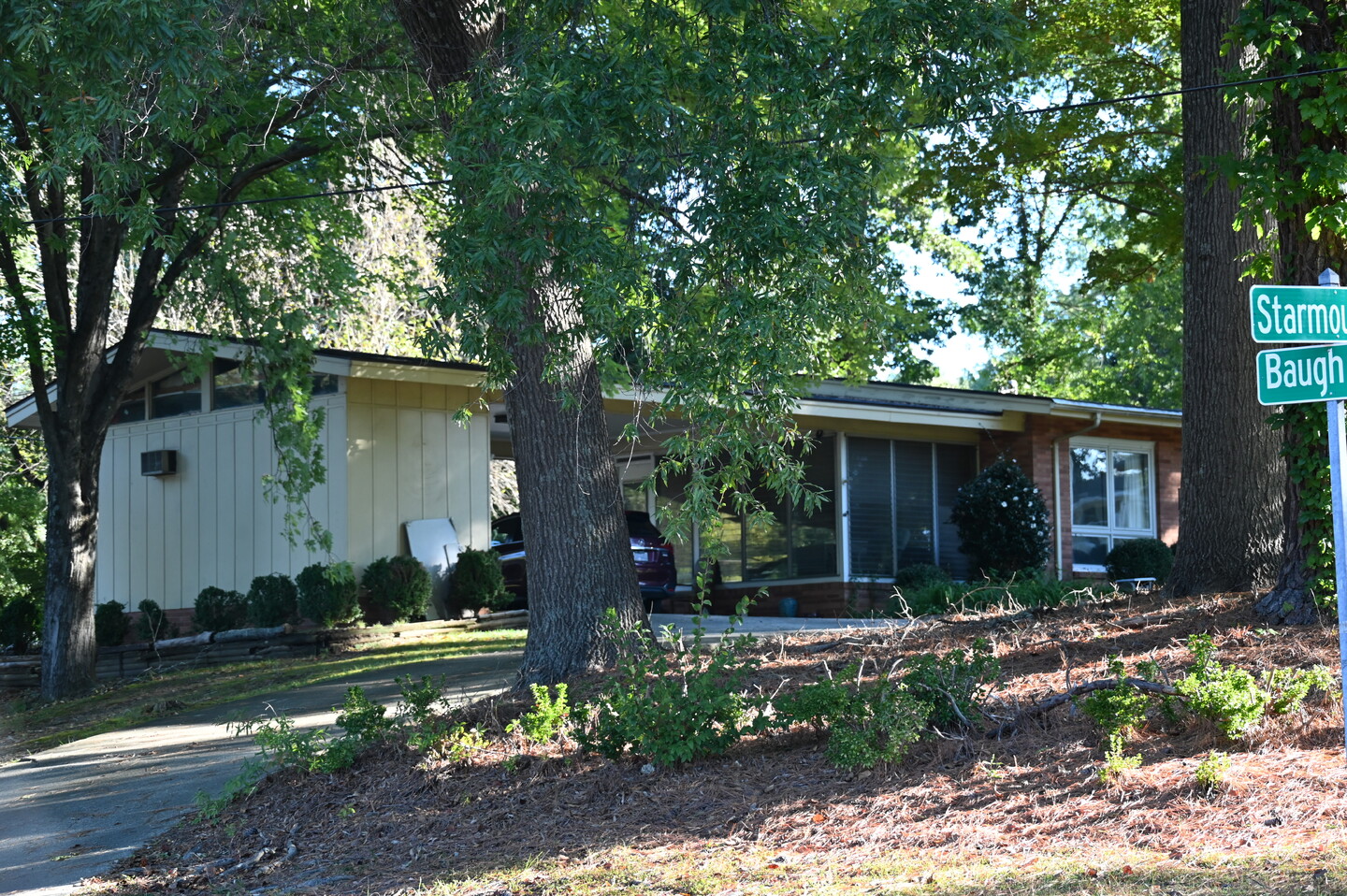
    <title type="html"><![CDATA[Starmount]]></title>
    <summary type="html"><![CDATA[<p><strong><em>Intact example of Raleigh's postwar suburban construction boom with modest-sized Ranch style houses and curvilinear streets</em></strong></p><img src="https://raleighhistoric.org/files/fullsize/10a08ec6a027751adae3b7207bd97df8.jpg" alt="[Untitled]" /><br/><p>After World War II, Raleigh experienced a subdivision construction boom. New neighborhoods sprung up to provide much needed housing, particularly north of downtown. These areas consisted mostly of small, modest single-family residences. Starmount is one of East Raleigh’s later midcentury subdivisions following this trend. Unlike similar developments of the time, Starmount lots had no racially restrictive covenants. Due to its custom development, Starmount has more architectural variety than tract subdivisions. The neighborhood is primarily characterized by its iconic Ranch style houses. The curvilinear street pattern is common in many subdivisions of the era. Starmount stands out as a highly intact example of Raleigh’s postwar suburban boom. </p><p>Build Date: Late 1950s-1960s</p><p><em><strong><a href="https://raleighhistoric.org/items/show/232">For more (including 8 images) view the original article</a></strong></em></p>]]></summary>
    <published>2026-10-15T20:58:22+00:00</published>
    <updated>2026-11-04T14:05:25+00:00</updated>
    <link rel="alternate" type="text/html" href="https://raleighhistoric.org/items/show/232"/>
    <id>https://raleighhistoric.org/items/show/232</id>
    <author>
      <name>RHDC</name>
    </author>
  </entry>
  <entry>
    <title type="html"><![CDATA[Chuck &quot;Baba&quot; Davis]]></title>
    <summary type="html"><![CDATA[<img src="https://raleighhistoric.org/files/fullsize/807c0ba6062f400e80f48af468e94316.jpg" alt="Davis from a performance announcement at the Carolina Theatre in Durham, September 26, 2004" /><br/><p>Fourth Ward native Charles R. Davis was a force of nature whose rhythmic heartbeat bridged the distance between the African continent and the American South. Davis was born on Jamaica St. and graduated from Ligon High School in 1954 and originally trained as a naval medical corpsman but eventually traded his nursing scrubs for flowing African robes, declaring that while nursing was the "cure," dance was the "prevention." As the visionary founder of DanceAfrica and the Durham-based African American Dance Ensemble, he transformed the stage into a sacred space using traditional West African movement to combat racism and foster community healing. A literal and figurative giant, he earned the nickname of “Baba” the African word for father and was recognized as one of America's "100 Irreplaceable Dance Treasures," yet he remained a man of the people, known for his all-encompassing hugs and his universal mantra, "Peace, love, and respect for everybody."</p><p><em><strong><a href="https://raleighhistoric.org/items/show/230">For more view the original article</a></strong></em></p>]]></summary>
    <published>2026-04-30T18:39:38+00:00</published>
    <updated>2026-09-28T20:25:46+00:00</updated>
    <link rel="alternate" type="text/html" href="https://raleighhistoric.org/items/show/230"/>
    <id>https://raleighhistoric.org/items/show/230</id>
    <author>
      <name>City of Raleigh</name>
    </author>
  </entry>
  <entry>
    <title type="html"><![CDATA[Effie Whitaker]]></title>
    <summary type="html"><![CDATA[<img src="https://raleighhistoric.org/files/fullsize/802d6e1bd0a5ce6a669deec1d13e3986.jpg" alt="Effie Whitaker from Culture Town: Life in Raleigh’s African American Communities, by Linda Simmons-Henry and Linda Harris Edmisten, 1993." /><br/><p>Effie Whitaker was a lifelong educator whose work helped shape the North Carolina School for the Deaf. Growing up in Raleigh’s Fourth Ward, she became a strong advocate for deaf students at a time when specialized education was still developing in the state.</p><p>Whitaker championed the use of American Sign Language in the classroom and helped create hands-on vocational programs which gave students practical skills and greater independence. She also played an important role in moving the school from Raleigh to its long-term home in Morganton, a change that expanded access to education for deaf children across North Carolina.</p><p>Her commitment to inclusion, communication, and opportunity continues to influence the school’s mission today.</p><p><em><strong><a href="https://raleighhistoric.org/items/show/229">For more view the original article</a></strong></em></p>]]></summary>
    <published>2026-04-30T18:38:09+00:00</published>
    <updated>2026-09-28T20:29:28+00:00</updated>
    <link rel="alternate" type="text/html" href="https://raleighhistoric.org/items/show/229"/>
    <id>https://raleighhistoric.org/items/show/229</id>
    <author>
      <name>City of Raleigh</name>
    </author>
  </entry>
  <entry>
    <title type="html"><![CDATA[Oak City Auxiliary]]></title>
    <summary type="html"><![CDATA[<img src="https://raleighhistoric.org/files/fullsize/4197c346bdfa9f17cfd73458aa940ce9.jpg" alt="Dulcina DeBerry as a young woman" /><br/><p>During World War I, the Wake County Red Cross opened canteens in Raleigh to support soldiers traveling through the city. Since many Raleigh goods and services were segregated, Black troops were turned away. In response, local leaders created the Oak City Auxiliary on July 8, 1917, to ensure African American service members received food, care, and dignity.</p><p>The Auxiliary’s nurses were recruited and organized by prominent Black women in the community, who also served on its executive board. One of its key leaders was Dulcina Blanch Torrence DeBerry. A Shaw University graduate and the wife of a minister, DeBerry chaired the Auxiliary from September 1917 to March 1918, and guided the work to meet the needs of Black servicemen during the war.</p><p>After the war, DeBerry continued her commitment to education and public service. She taught grade school North Carolina, and later became the first Black librarian in the Huntsville-Madison Public Library System. She was honored by a  library branch in Huntsville, Alabama, named in her honor.</p><p><em><strong><a href="https://raleighhistoric.org/items/show/228">For more view the original article</a></strong></em></p>]]></summary>
    <published>2026-04-30T18:34:33+00:00</published>
    <updated>2026-09-28T20:22:35+00:00</updated>
    <link rel="alternate" type="text/html" href="https://raleighhistoric.org/items/show/228"/>
    <id>https://raleighhistoric.org/items/show/228</id>
    <author>
      <name>City of Raleigh</name>
    </author>
  </entry>
  <entry>
    <title type="html"><![CDATA[Capehart Hall]]></title>
    <summary type="html"><![CDATA[<img src="https://raleighhistoric.org/files/fullsize/b2f61e259a981e29f2ef7eac9de558a8.jpg" alt="Looking west toward Capehart Hall, March 1967" /><br/><p>Dr. Lovelace B. Capehart was a Shaw University trained physician and professor who constructed a building which quickly became the center of life for the Fourth Ward community. He named it after himself, Capehart Hall, and it became a lively hub of Black enterprise and culture in Raleigh. The space pulsed with community life, Black owned businesses filled its rooms, and groups like the Knights of Pythias hosted elegant gatherings in its halls. Over the decades, Capehart Hall evolved with the neighborhood, housing everything from a A&P grocery store to the Paradise Club, to a Black Panther food bank in the 1960s. Though the building was demolished during  urban renewal in the early 1970s, its legacy endures as a reminder of a once thriving center of African American resilience, creativity, and community care.</p><p><em><strong><a href="https://raleighhistoric.org/items/show/227">For more (including 2 images) view the original article</a></strong></em></p>]]></summary>
    <published>2026-04-30T18:32:58+00:00</published>
    <updated>2026-09-28T20:30:31+00:00</updated>
    <link rel="alternate" type="text/html" href="https://raleighhistoric.org/items/show/227"/>
    <id>https://raleighhistoric.org/items/show/227</id>
    <author>
      <name>City of Raleigh</name>
    </author>
  </entry>
  <entry>
    <title type="html"><![CDATA[Tent Sisters Hall]]></title>
    <summary type="html"><![CDATA[<img src="https://raleighhistoric.org/files/fullsize/fc71b0085045bdc64f491017723e4229.jpg" alt="Children are seen on the corner of Cannister and Battle Streets, ca. 1939" /><br/><p>The large building shown here was known for many years as Tent Sisters’ Hall, the meeting place of the United Order of Tents. This organization, founded and led by African American church women, was a secret society devoted to community care. Members provided healthcare, end of life care, and financial assistance to people in need. The hall stood at the northeast corner of Cannister and Battle Streets in the Southside neighborhood.</p><p>Women’s fraternal groups such as the Tents also played a major role in creating social welfare programs for older adults. The Grand United Order of Tents, founded in Norfolk, Virginia, in 1866, opened an Old Folks’ Home in Hampton in 1897 to support orphaned children and members who could no longer care for themselves. A similar home for elderly members was later established in Raleigh.</p><p>In 1909, civil rights leader, W.E.B. Du Bois highlighted the Tent Sisters’ Hall in his book, Efforts for Social Betterment Among Negro Americans, calling it, “the most interesting experiment in the country.”</p><p><em><strong><a href="https://raleighhistoric.org/items/show/226">For more view the original article</a></strong></em></p>]]></summary>
    <published>2026-04-30T18:31:46+00:00</published>
    <updated>2026-09-28T20:31:17+00:00</updated>
    <link rel="alternate" type="text/html" href="https://raleighhistoric.org/items/show/226"/>
    <id>https://raleighhistoric.org/items/show/226</id>
    <author>
      <name>City of Raleigh</name>
    </author>
  </entry>
  <entry>
    <title type="html"><![CDATA[Willie Otey Kay]]></title>
    <summary type="html"><![CDATA[<img src="https://raleighhistoric.org/files/fullsize/d8483fbc50526bda3a4734dc8a72b5bc.jpg" alt="Willie Otey Kay in her living room, December 18, 2006" /><br/><p>For more than 60 years, Willie Virginia Otey Kay created elegant, custom gowns which made her one of North Carolina’s most sought after clothing designers. Born at 125 West Cabarrus Street, she was the youngest of eight children. Kay graduated from Shaw University in 1912 with a degree in Home Economics, winning the school’s dressmaking competition along the way.</p><p>She married John Walcott Kay and moved to Wilmington, but after his death in 1927, she returned to Raleigh with five children to support. With help from her sisters, Josephine, Inez, Gloria, Constance, and June, she opened her own dressmaking business. The Otey name soon became known across the state for fine formal wear, serving both Black and white clients.</p><p>Kay remained deeply connected to her faith as a lifelong member of Saint Ambrose Episcopal Church. Her children later honored her legacy by dedicating a stained-glass window in her memory.</p><p><em><strong><a href="https://raleighhistoric.org/items/show/225">For more view the original article</a></strong></em></p>]]></summary>
    <published>2026-04-30T18:30:33+00:00</published>
    <updated>2026-09-28T20:35:18+00:00</updated>
    <link rel="alternate" type="text/html" href="https://raleighhistoric.org/items/show/225"/>
    <id>https://raleighhistoric.org/items/show/225</id>
    <author>
      <name>City of Raleigh</name>
    </author>
  </entry>
  <entry>
    <title type="html"><![CDATA[Pete Wilder and the Raleigh Grays]]></title>
    <summary type="html"><![CDATA[<img src="https://raleighhistoric.org/files/fullsize/a19c2d2d4d85d5e9762aeb87e1dc7b24.jpg" alt="Wilbert “Pete” Wilder, From Culture Town: Life in Raleigh’s African American Communities, by Linda Simmons-Henry and Linda Harris Edmisten, 1993." /><br/><p>Baseball was a favorite pastime for many children growing up in the Fourth Ward, where neighborhood teams played one another across Raleigh.  Wilbur Allen “Pete” Wilder, born on McKee Street, was one of those kids who fell in love with the game. He graduated with the first class of Washington High School in 1927 and later studied journalism locally at Shaw University, as well as at New York University and at Fordham University.</p><p>Wilder played baseball at Shaw and went on to pitch professionally in the Negro Leagues. In 1937, he founded the Raleigh Grays, a semi professional team who played at Shaw Alumni Field and later at Chavis Park. After World War II, he and Arthur Dove launched another team, the Raleigh Tigers, in 1946.</p><p>Wilder’s impact on Raleigh sports was long-lasting. He was inducted into the Shaw University Athletics Hall of Fame in 1992 and the Raleigh Hall of Fame in 2010.</p><p><em><strong><a href="https://raleighhistoric.org/items/show/224">For more view the original article</a></strong></em></p>]]></summary>
    <published>2026-04-30T18:29:26+00:00</published>
    <updated>2026-09-28T20:30:05+00:00</updated>
    <link rel="alternate" type="text/html" href="https://raleighhistoric.org/items/show/224"/>
    <id>https://raleighhistoric.org/items/show/224</id>
    <author>
      <name>City of Raleigh</name>
    </author>
  </entry>
  <entry>
    <title type="html"><![CDATA[Home of Edward Austin Johnson]]></title>
    <summary type="html"><![CDATA[<img src="https://raleighhistoric.org/files/fullsize/c343bda7be6baaa7cbb37847ff4f942a.jpg" alt="Edward Austin Johnson, from The Crisis, Volume 15, No. 1, Edited by W.E.B. Du Bois and Written by James Weldon Johnson, November 1917 issue" /><br/><p>Edward Austin Johnson was born into slavery in Wake County in 1860 and went on to become one of North Carolina’s most influential Black educators and civic leaders. He attended Raleigh’s Washington School and later graduated from Atlanta University in 1883. Returning to Raleigh in 1885, he became principal of Washington School and enrolled in the first class of Shaw University’s new law school, the only law program open to African Americans between Washington, D.C., and Atlanta, Georgia.</p><p>While at Shaw, Johnson wrote, A School History of the Negro Race in America (1891), the first textbook by a Black author approved by the North Carolina State Board of Education for public school use. After he earned his law degree in 1890, he lived in the Fourth Ward near South West Street and West Lenoir Street, and was elected alderman for the ward seven years later. Johnson later taught at his alma mater and served as dean of the law school from 1903 to 1906.</p><p>He moved to New York City soon after, where he became active in politics and, in 1918, served as the first Black member of the New York State Assembly. He attempted a run for  New York state senate seat in 1928. When Johnson died in 1944, much of his estate was dedicated to supporting a music scholarship at Shaw University and providing assistance for blind African American youth in Raleigh.</p><p><em><strong><a href="https://raleighhistoric.org/items/show/223">For more view the original article</a></strong></em></p>]]></summary>
    <published>2026-04-30T18:28:11+00:00</published>
    <updated>2026-09-28T20:32:42+00:00</updated>
    <link rel="alternate" type="text/html" href="https://raleighhistoric.org/items/show/223"/>
    <id>https://raleighhistoric.org/items/show/223</id>
    <author>
      <name>City of Raleigh</name>
    </author>
  </entry>
  <entry>
    <title type="html"><![CDATA[Peter &amp; Mike&#039;s Grill]]></title>
    <summary type="html"><![CDATA[<img src="https://raleighhistoric.org/files/fullsize/0b11e8027e5e43ddf9eb5e80666fd0d6.jpg" alt="Advertisement in local newspaper on October 23, 1948." /><br/><p>In 1950, a corner of Raleigh’s South Dawson Street transformed into a culinary landmark when Peter Pavlakos and Michael Thevis joined forces to open the Pete and Mike’s Grill. Both men were seasoned veterans of the city's cafe scene. Pavlakos already established himself with the Fruit and Lunch Store and the Lincoln Cafe, while Thevis, a Greek immigrant from Sparta, brought a lifetime of experience to the partnership. Their collaboration was more than a business deal, it was a family affair, rooted in the kinship between the Thevis and Pavlakos households residing nearby on Dawson and Martin Streets.</p><p>The restaurant advertised in the 1950-1952 Negro Travelers Green Book. The information book listed Black owned or sympathetic businesses where Black travelers could get service. It became indispensable for Black families traveling across the United States. The guide identified hotels, restaurants, gas stations, and private homes who would welcome Black travelers. This system helped them avoid the humiliation of being turned away or the physical danger of "sundown towns".</p><p><em><strong><a href="https://raleighhistoric.org/items/show/222">For more view the original article</a></strong></em></p>]]></summary>
    <published>2026-04-30T18:26:43+00:00</published>
    <updated>2026-09-28T20:34:34+00:00</updated>
    <link rel="alternate" type="text/html" href="https://raleighhistoric.org/items/show/222"/>
    <id>https://raleighhistoric.org/items/show/222</id>
    <author>
      <name>City of Raleigh</name>
    </author>
  </entry>
  <entry>
    <title type="html"><![CDATA[Memorial Auditorium]]></title>
    <summary type="html"><![CDATA[<img src="https://raleighhistoric.org/files/fullsize/4c7c0e3cd8ffca88b2956aedbadab13b.jpg" alt="Memorial Auditorium" /><br/><p>Construction on Memorial Auditorium began in 1932 to honor Raleigh’s soldiers who died in World War I. The site had a long history: Originally home to the Governor’s Palace, built in 1814-16, later became the Centennial Graded School, established in 1876 as Raleigh’s first public school and the only the second in North Carolina. The school served white children and was eventually replaced by a larger brick building in the 1880s before being demolished in 1931 to make way for the new auditorium.</p><p>The auditorium welcomed generations of Black performers, students, and community members who were often barred from other venues. From local Fourth Ward artists to nationally known African American entertainers passing through the Jim Crow South, the building became a rare space where Black talent could shine. Its history holds not only the memory of fallen soldiers, but also the creative resilience of Raleigh’s Black community.</p><p><em><strong><a href="https://raleighhistoric.org/items/show/221">For more view the original article</a></strong></em></p>]]></summary>
    <published>2026-04-30T18:25:49+00:00</published>
    <updated>2026-09-28T20:24:44+00:00</updated>
    <link rel="alternate" type="text/html" href="https://raleighhistoric.org/items/show/221"/>
    <id>https://raleighhistoric.org/items/show/221</id>
    <author>
      <name>City of Raleigh</name>
    </author>
  </entry>
  <entry>
    <title type="html"><![CDATA[Dusty&#039;s Service Center]]></title>
    <summary type="html"><![CDATA[<img src="https://raleighhistoric.org/files/fullsize/cb70ebda05a56425db7584065c03a430.jpg" alt="Dusty Dewberry working at his Service Center, November 15, 2016" /><br/><p>Lewis O. “Dusty” Dewberry, born in 1947, discovered his passion for cars while studying auto mechanics at Ligon High School, where he graduated in 1966. In the 1980s, he opened his own repair shop, which quickly became an anchor for the Fourth Ward community. Dusty and his wife, Barbara, ran the shop as more than a business, they offered food, shelter, and support to neighbors during hard times.</p><p>Dusty’s shop closed in March 2017, and two years later the space became home to Sam Jones BBQ. Dewberry passed away in 2020, leaving behind a legacy of skill, generosity, and community care.</p><p><em><strong><a href="https://raleighhistoric.org/items/show/220">For more view the original article</a></strong></em></p>]]></summary>
    <published>2026-04-30T18:19:10+00:00</published>
    <updated>2026-09-28T20:32:03+00:00</updated>
    <link rel="alternate" type="text/html" href="https://raleighhistoric.org/items/show/220"/>
    <id>https://raleighhistoric.org/items/show/220</id>
    <author>
      <name>City of Raleigh</name>
    </author>
  </entry>
  <entry>
    <title type="html"><![CDATA[Union Grove Baptist Church]]></title>
    <summary type="html"><![CDATA[<img src="https://raleighhistoric.org/files/fullsize/12765c0214390db454f6c0889f04a872.jpg" alt="Union Baptist Church, 2026" /><br/><p>Union Grove Baptist Church took root around 1905 under the leadership of Reverend Alex A. Jones, beginning as a humble wooden sanctuary on South Saunders Street. By 1935, members like recording artist Hamp Jones who journeyed from South Carolina in search of new opportunities during the Great Depression. Jones and others found the small Baptist congregation and helped raise the wooden church that still stands today. While much of the surrounding neighborhood was erased by urban renewal in the 1960s and 1970s, Union Grove Baptist Church endured, becoming the lone surviving spiritual landmark of its community. Its doors remain open, carrying forward more than a century of faith, resilience, and fellowship in Raleigh.</p><p><em><strong><a href="https://raleighhistoric.org/items/show/219">For more view the original article</a></strong></em></p>]]></summary>
    <published>2026-04-30T18:17:30+00:00</published>
    <updated>2026-09-28T20:33:10+00:00</updated>
    <link rel="alternate" type="text/html" href="https://raleighhistoric.org/items/show/219"/>
    <id>https://raleighhistoric.org/items/show/219</id>
    <author>
      <name>City of Raleigh</name>
    </author>
  </entry>
  <entry>
    <title type="html"><![CDATA[Mount Hope Cemetery]]></title>
    <summary type="html"><![CDATA[<img src="https://raleighhistoric.org/files/fullsize/0681f5220f4856123a3af480a33072e4.jpg" alt="Mount Hope Cemetery entry" /><br/><p>Established in 1872, Mount Hope Cemetery was the first municipal burial grounds for the newly freed in North Carolina. Many of these individuals, born into slavery, created a thriving and diverse community. Those interred in the cemetery owned shops and businesses, became pioneers in education, and were skillful entrepreneurs. There were also many who fought for their country and led the struggle for equality.</p><p>The City of Raleigh appointed three prominent African American citizens to locate and purchase land for a new cemetery expressly for the interment of African Americans. On January 16, 1872, the City bought eleven and one-half acres on the south side of the city for the new Mount Hope Cemetery. Mount Hope provides a peaceful retreat to reflect and remember. Almost 1,500 monuments mark only a few of the 7,000 burials in the historic portion of the cemetery. The identities of many more who rest here have been lost over time. </p><p><em><strong><a href="https://raleighhistoric.org/items/show/218">For more view the original article</a></strong></em></p>]]></summary>
    <published>2026-04-30T18:16:30+00:00</published>
    <updated>2026-09-28T20:21:16+00:00</updated>
    <link rel="alternate" type="text/html" href="https://raleighhistoric.org/items/show/218"/>
    <id>https://raleighhistoric.org/items/show/218</id>
    <author>
      <name>City of Raleigh</name>
    </author>
  </entry>
  <entry>
    <title type="html"><![CDATA[Washington Graded School]]></title>
    <summary type="html"><![CDATA[<img src="https://raleighhistoric.org/files/fullsize/13ee2ef273c23878bb816a5b6c443225.jpg" alt="Washington Graded School, date unknown" /><br/><p>Washington School was founded after the Civil War to educate newly freed African Americans at the corner of McDowell and South Streets. As Raleigh grew, a new school building was constructed in 1923–1924 to serve the rising number of students. For many years, Washington Graded and High School was the only secondary school available to Black students in the city, a role it held until John W. Ligon Junior–Senior High School opened in 1953. The school later integrated in 1971.</p><p>In 1982, Washington became part of Raleigh’s magnet program, offering a Gifted & Talented curriculum for elementary students. Its long legacy in public education was recognized in 2005, when the school was added to the National Register of Historic Places.</p><p><em><strong><a href="https://raleighhistoric.org/items/show/217">For more view the original article</a></strong></em></p>]]></summary>
    <published>2026-04-30T18:12:08+00:00</published>
    <updated>2026-09-28T20:21:53+00:00</updated>
    <link rel="alternate" type="text/html" href="https://raleighhistoric.org/items/show/217"/>
    <id>https://raleighhistoric.org/items/show/217</id>
    <author>
      <name>City of Raleigh</name>
    </author>
  </entry>
  <entry>
    <title type="html"><![CDATA[First Congregational Church]]></title>
    <summary type="html"><![CDATA[<img src="https://raleighhistoric.org/files/fullsize/c45aa2b896f6e32f2549a7121bb3a696.jpg" alt="First Congregational Church after 1914" /><br/><p>The roots of First Congregational Church date back to 1867, when the American Missionary Association founded a school and church for newly freed African Americans. As the congregation grew, members built a wood frame church with a corner tower in 1896. Under the leadership of Reverend Perfect Robert  DeBerry, they later constructed a larger brick church in a Gothic Revival style at the corner of South and Manly Streets.</p><p>First Congregational became a vital center of religious and civic life in the Fourth Ward. It hosted North Carolina’s first African American Boy Scout troop and, in 1944, the inaugural meeting of the National Association for the Advancement of Colored People (NAACP) North Carolina State Conference.</p><p>During urban renewal in 1976, the congregation was forced to relocate to Creech Road, and the original chapel was demolished. The church community, however, continues its work and legacy today.</p><p><em><strong><a href="https://raleighhistoric.org/items/show/216">For more view the original article</a></strong></em></p>]]></summary>
    <published>2026-04-29T17:57:36+00:00</published>
    <updated>2026-09-28T20:28:41+00:00</updated>
    <link rel="alternate" type="text/html" href="https://raleighhistoric.org/items/show/216"/>
    <id>https://raleighhistoric.org/items/show/216</id>
    <author>
      <name>City of Raleigh</name>
    </author>
  </entry>
  <entry>
    <title type="html"><![CDATA[Manly Street Christian Church (now Macedonia Church)]]></title>
    <summary type="html"><![CDATA[<img src="https://raleighhistoric.org/files/fullsize/b74c520e69e17e5511dc8301fd8d3cc9.jpg" alt="[Untitled]" /><br/><p>In 1867, the American Missionary Association (AMA) met with Black residents in a small one room building on South Street near Manly, where they helped establish  the Freedmen’s School. This early partnership laid the foundation for what would become First Congregational Church.</p><p>The church soon grew into a beacon of hope for the Fourth Ward community. In 1877, Reverend George S. Smith became its first Black pastor. Nearly a century later, in 1976, urban renewal forced the congregation to relocate, and the original church was demolished. Many treasured features such as the stained-glass  windows, the pipe organ, curved pews, and pulpit furniture were carefully moved to the new building on Creech Road. The congregation held its first service there on July 3, 1977, continuing a legacy of faith and resilience.</p><p><em><strong><a href="https://raleighhistoric.org/items/show/215">For more view the original article</a></strong></em></p>]]></summary>
    <published>2026-04-29T17:56:19+00:00</published>
    <updated>2026-09-28T20:23:23+00:00</updated>
    <link rel="alternate" type="text/html" href="https://raleighhistoric.org/items/show/215"/>
    <id>https://raleighhistoric.org/items/show/215</id>
    <author>
      <name>City of Raleigh</name>
    </author>
  </entry>
</feed>